A buyer opens a portal search for the 78209 zip code, filters to Oak Park-Northwood, and sees single-family homes listed from the high $200,000s to well past $1.9 million. On the surface that band looks incoherent. It is not. The spread inside this small pocket north of Alamo Heights follows three visible mechanisms, and once a buyer can read for them, most of the pricing surprises stop being surprises.
The thesis is simple. Oak Park-Northwood is three overlapping submarkets stacked inside one zip code: a school-district boundary that separates Oak Park from eastern Northwood, a mid-century ranch inventory that trades on renovation math rather than finish level, and a thin but growing new-construction layer that is beginning to reset the ceiling. A listing price only makes sense once you locate the home inside all three.
Where the neighborhood actually sits
Oak Park-Northwood is not a suburb and not a Zachry-era subdivision in the singular sense. The Oak Park-Northwood Neighborhood Association describes the area as sitting inside Loop 410, roughly between North New Braunfels on the west and Harry Wurzbach on the east, first developed in the early 1950s, with the "Northwood Estates" section built by San Antonio construction magnate H.B. Zachry beginning in 1955. That timing matters. It explains the housing stock, the lot sizes, and the mature live oak canopy that shapes what a renovation dollar buys today.
The area is compact. Redfin's neighborhood profile pins Oak Park-Northwood at roughly 9,463 residents inside a footprint with a Walk Score of 48, which reads as a car-oriented residential enclave with clusters of retail at the edges rather than a walkable grid.
The three submarkets, in one table
| Submarket | Rough boundary | Typical price band | What the price reflects |
|---|---|---|---|
| Oak Park | West of Nacogdoches, feeding AHISD | Mid $300s to $500s for standard homes; $700s+ for updated | AHISD attendance zone, smaller original ranches, walkable to Broadway retail |
| Eastern Northwood | East of North New Braunfels, feeding NEISD | $280K to $700K, sub-$300s common on smaller lots | Larger inventory of unrenovated originals, NEISD attendance |
| Custom and new-build layer | Scattered across both sides | $720K to $1.9M+ | Reimagined mid-century or ground-up new construction on infill lots |
Those bands come from a mix of active listing snapshots and neighborhood commentary as of mid-2026. They should be read as directional, not a valuation.
The school-district line is the first filter
The most consequential boundary inside Oak Park-Northwood is not a physical street feature. It is the split between Alamo Heights ISD and Northeast ISD, and it runs through the middle of the neighborhood. Oak Park, west of Nacogdoches, sits inside AHISD. Homes east of New Braunfels sit inside NEISD. Both are respected districts, and this post takes no position on which family should prefer which. The relevant fact for a buyer trying to price a home is that the market has been paying more, per square foot, on the AHISD side of that line for decades, and that premium survives even when the two homes look nearly identical from the curb.
That is why an updated three-bedroom on the Oak Park side can list in the $600,000s while a similar ranch a few blocks east lists in the low $400s. Same era. Same builder vocabulary. Different attendance zone. A buyer who does not verify the boundary before writing an offer risks either overpaying for the wrong side of the line or dismissing a genuinely well-priced home on the assumption that it must be inferior.
The practical step is straightforward: pull the parcel's attendance zone from the district maps rather than trusting a portal's school card, which can misassign homes near the boundary.
The second filter is the housing stock itself
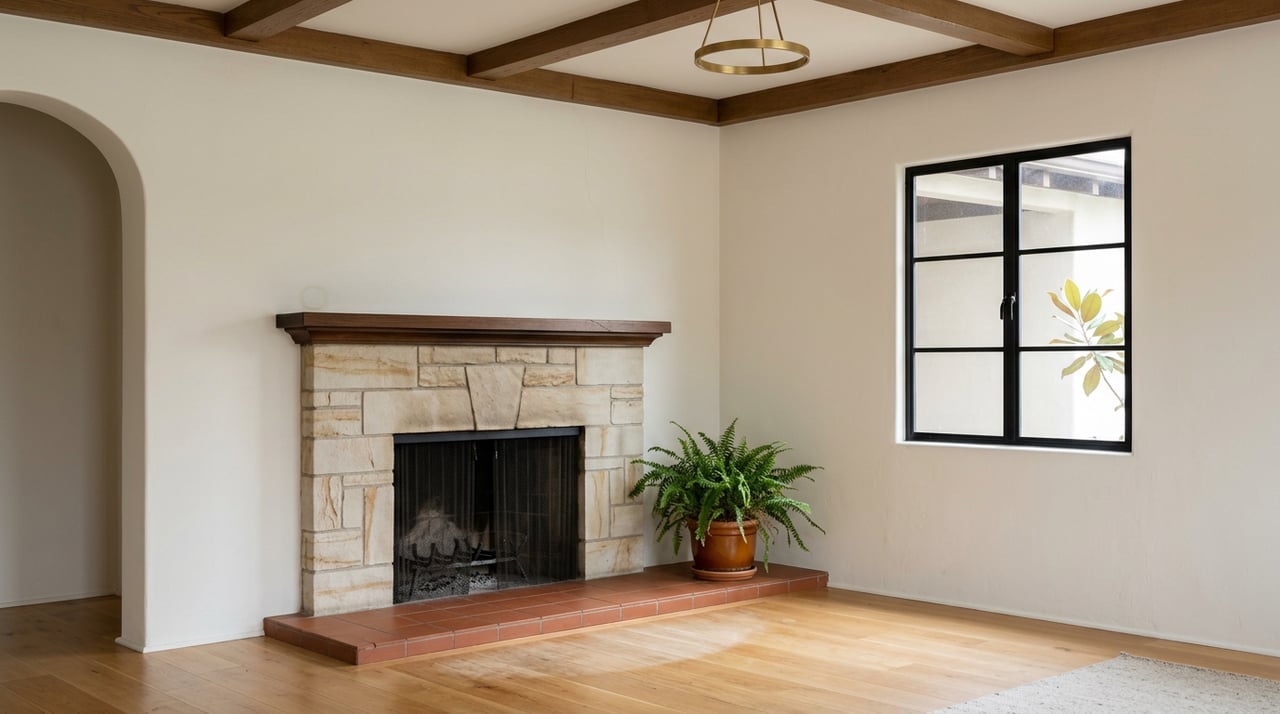
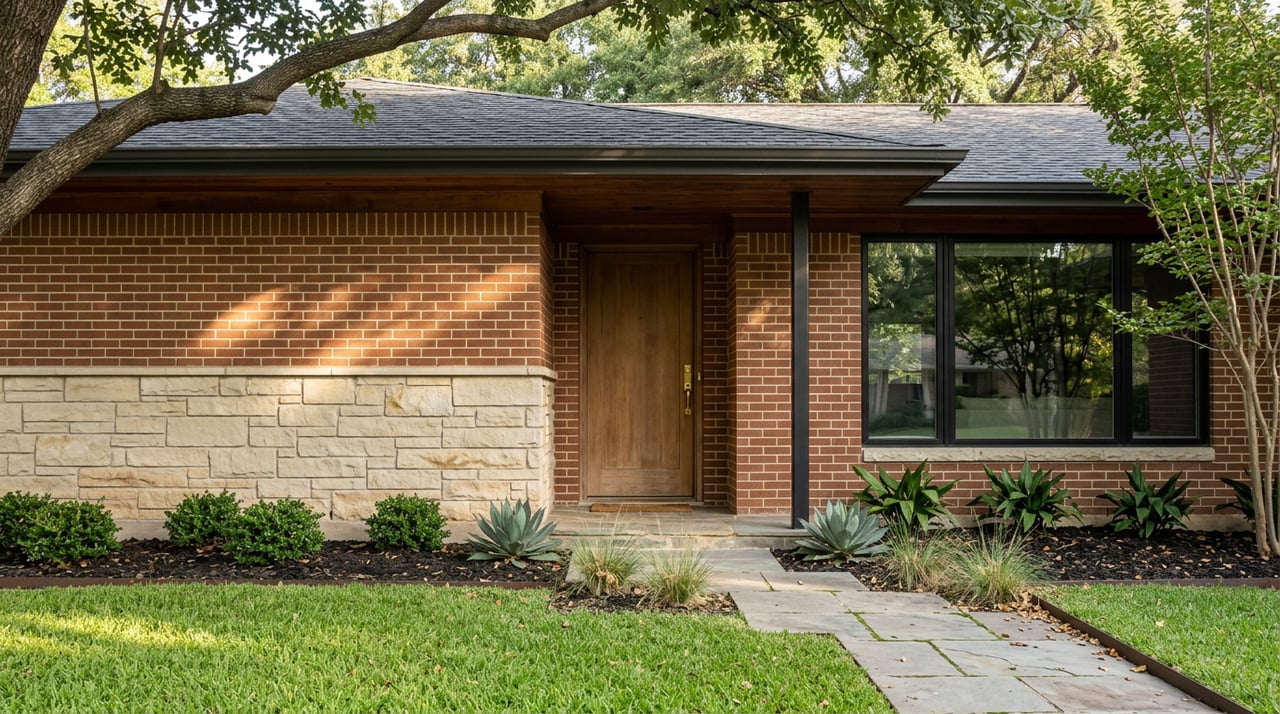
Zachry's development pattern in the 1950s produced long, low ranch-style homes on generous lots, many still shaded by 100-year-old live oaks. Homes.com's Oak Park-Northwood guide notes that ranch, Prairie-style, Spanish Revival and custom builds line the winding streets, with single-family homes clustering between roughly $280,000 and $700,000 and larger contemporary or custom houses reaching from $720,000 to over $1.9 million. Redfin's single-story snapshot as of mid-2026 shows a median list around $485,000 across 52 one-story listings, with typical time on market near 69 days.
The economic point is that most Oak Park-Northwood listings are not priced against each other. They are priced against a renovation. A 1957 stone ranch listed as-is at the low end of the band is really a lot purchase plus an implied construction budget. A fully reimagined ranch on the same street, taken to the studs with new electrical, plumbing and HVAC, is priced at the finished number the market will pay for that AHISD or NEISD address. Two listings a block apart can differ by $400,000, and both can be fairly priced. Reading the listing photos for foundation work, plumbing scope and window replacements is not optional here. It is the pricing exercise.
Character elements that appear in nearly every Oak Park-Northwood listing worth studying include:
- Original hardwood floors, often oak or pine, hidden under later carpet.
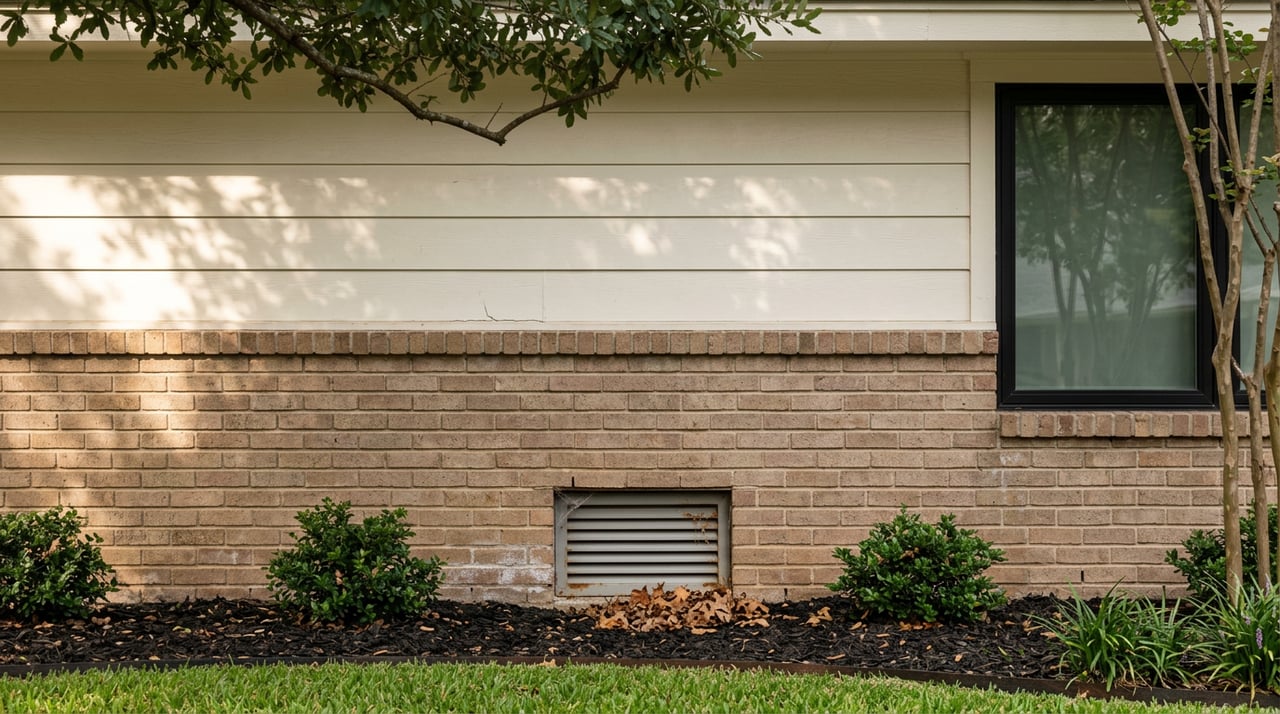
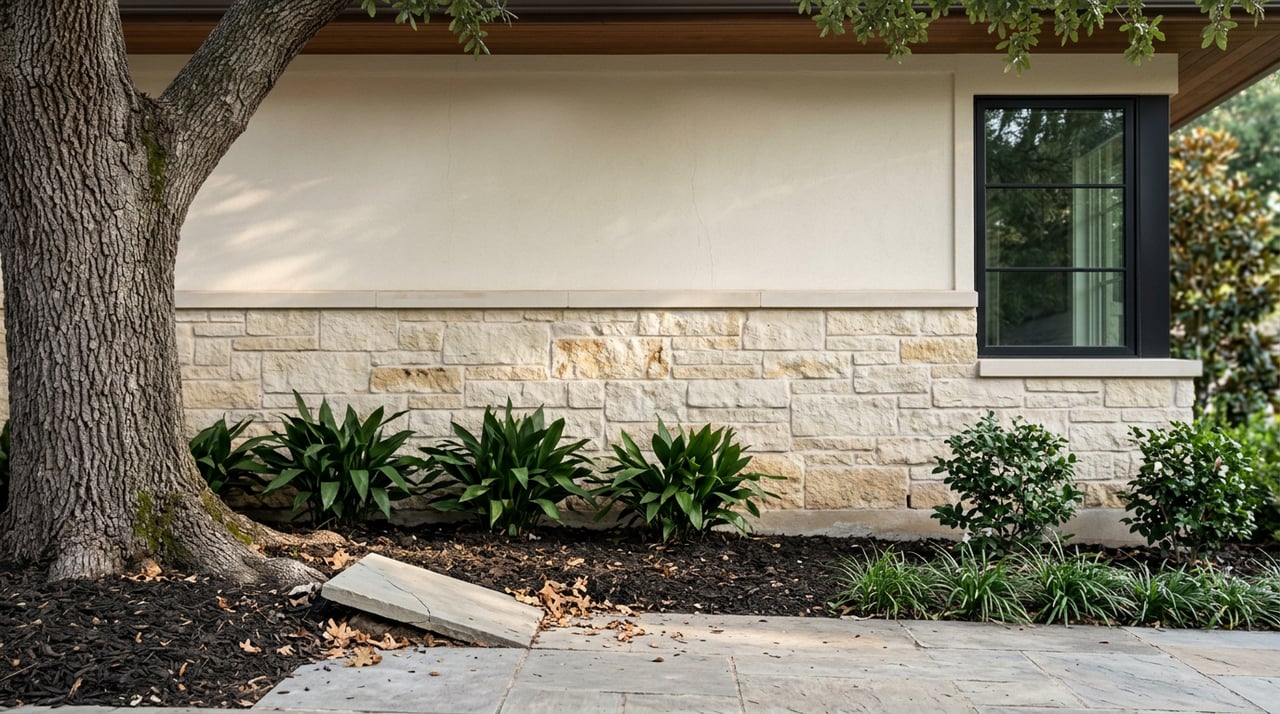
- Stone or brick veneer facades typical of the Zachry era.
- Corner lots and deep setbacks that support additions without breaking the streetscape.
- Mature live oaks that constrain footprint expansion because of root zones.
Those constraints and assets are what a valuation-led offer is actually measuring.
The third filter is the new-construction layer
New construction inside a 1950s neighborhood is unusual enough that it deserves its own mental bucket. In Oak Park-Northwood, that layer is small but active in 2025 and 2026. Recent examples include a six-home enclave designed by Overland Partners and built by Starnes Development on the AHISD side, a Mid-Century Modern residence at 110 Rockhill by Dave Isaacs Homes on a roughly 0.7-acre estate lot, and a small CVF Homes cul-de-sac of four-bedroom, three-and-a-half-bath homes with EV-ready garages.
These projects do two things to the local market. They set a new visible ceiling on the AHISD side, and they signal to owners of adjacent 1950s ranches that their lots may be worth more than their houses. Sellers who understand that distinction price accordingly. Buyers who miss it write offers that assume the seller is negotiating on a house when the seller is actually negotiating on a lot.
Reading a Northwood listing through the three filters
The mechanical exercise for any Oak Park-Northwood listing:
- Confirm the attendance zone against the district's own boundary map, not the portal card.
- Identify the era. If the listing describes original hardwoods, single-pane windows, or the phrase "solid mid-century bones," treat the number as a lot-plus-renovation figure and build a construction estimate before offering.
- Identify recent nearby closings that reset the ceiling. A new Overland-designed home closing at $1.5 million within a few blocks changes the underwriting for every reimagined ranch on the same street.
- Read the lot, not just the house. A 0.3-acre corner with mature oaks and rear-entry access to a two-car garage is a different asset than a 0.15-acre interior lot, even when the improved square footage is identical.
Buyers who apply that sequence stop being surprised by the price band. Sellers who apply it before listing tend to reach the market with a defensible number rather than a hopeful one.
The neighborhood a buyer is actually joining
Pricing is not the whole story, and it should not be sold as if it were. Oak Park-Northwood residents describe the area through its association-run events: the Fourth of July parade organized by the Oak Park-Northwood Neighborhood Association, the holiday lighting contest with an H-E-B gift card as the prize, and the walking groups that use the Salado Creek Greenway Trail and Northridge Park along Chevy Chase Drive. Daily errands run through Sunset Ridge, the Oak Park H-E-B, and long-standing spots like Frontier Burger, EZ's, Julian's and El Catrin. The Robber Baron Cave Preserve, a Texas Cave Management Association property less than a mile from the neighborhood's northern edge, is the local geographic curiosity that most residents cite when they explain why the neighborhood feels different from the subdivisions outside 410.
None of that changes the pricing math. It changes what a buyer is buying with the price.
FAQ
Why do two similar ranches on adjacent streets list at different prices? Most often, the attendance zone changes at the block, the level of renovation is not equivalent, or a recent nearby new-build has reset the comparable set on one side of the line. Any one of those can explain a six-figure spread.
Is the AHISD side always the better financial choice? Not automatically. Homes on the NEISD side often offer larger lots and lower per-foot pricing, which can produce stronger total returns after a thoughtful renovation. The correct answer is specific to the parcel, the household, and the holding period.
How should a seller price an unrenovated 1950s ranch here? As a lot with a habitable structure on it, benchmarked against recent as-is closings within a quarter-mile and the current construction cost per square foot for the level of finish a comparable buyer will demand. Overpricing an as-is home against fully renovated comps is the single most common pricing error in this neighborhood.
Working the numbers on a specific home
Every Oak Park-Northwood address deserves its own valuation, and no portal estimate substitutes for a walk through the property, a look at the lot, and a read of the closings within a few blocks. If you are weighing a purchase, a sale, or a renovation decision inside 78209, Cory Bakke can prepare a private analysis that places the home inside all three filters and returns a defensible number you can act on. Request a Private Home Valuation.