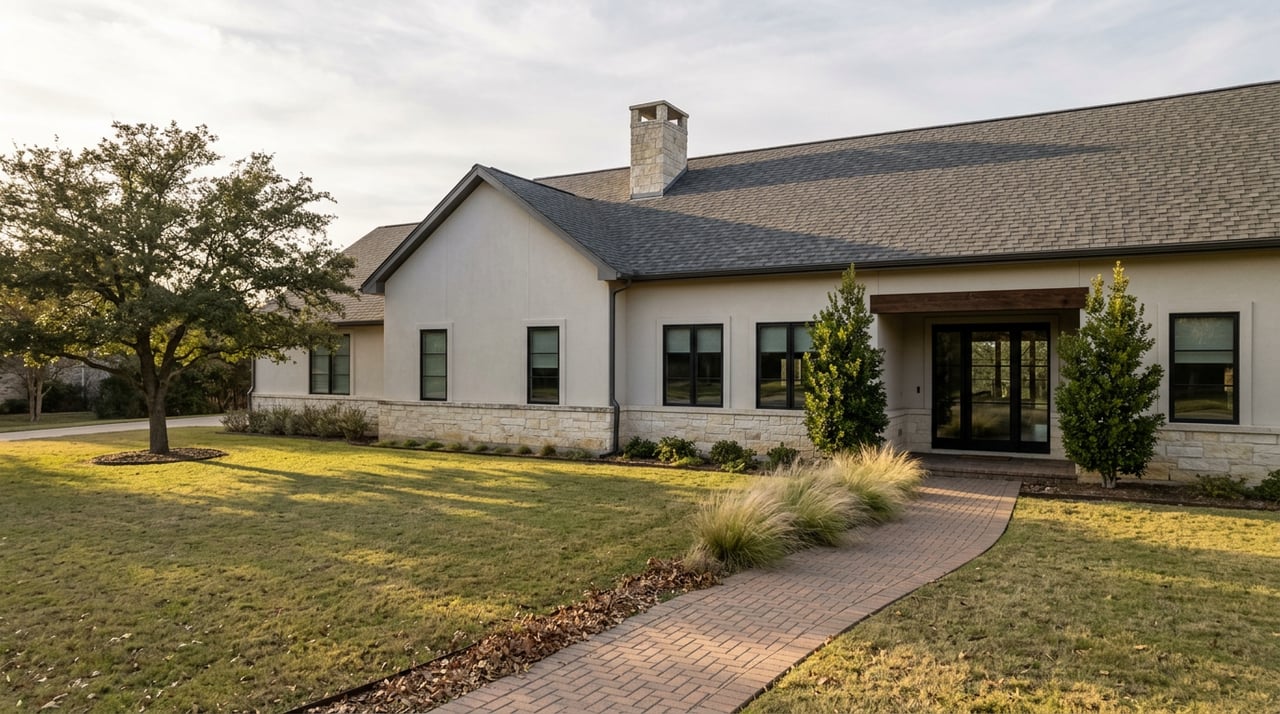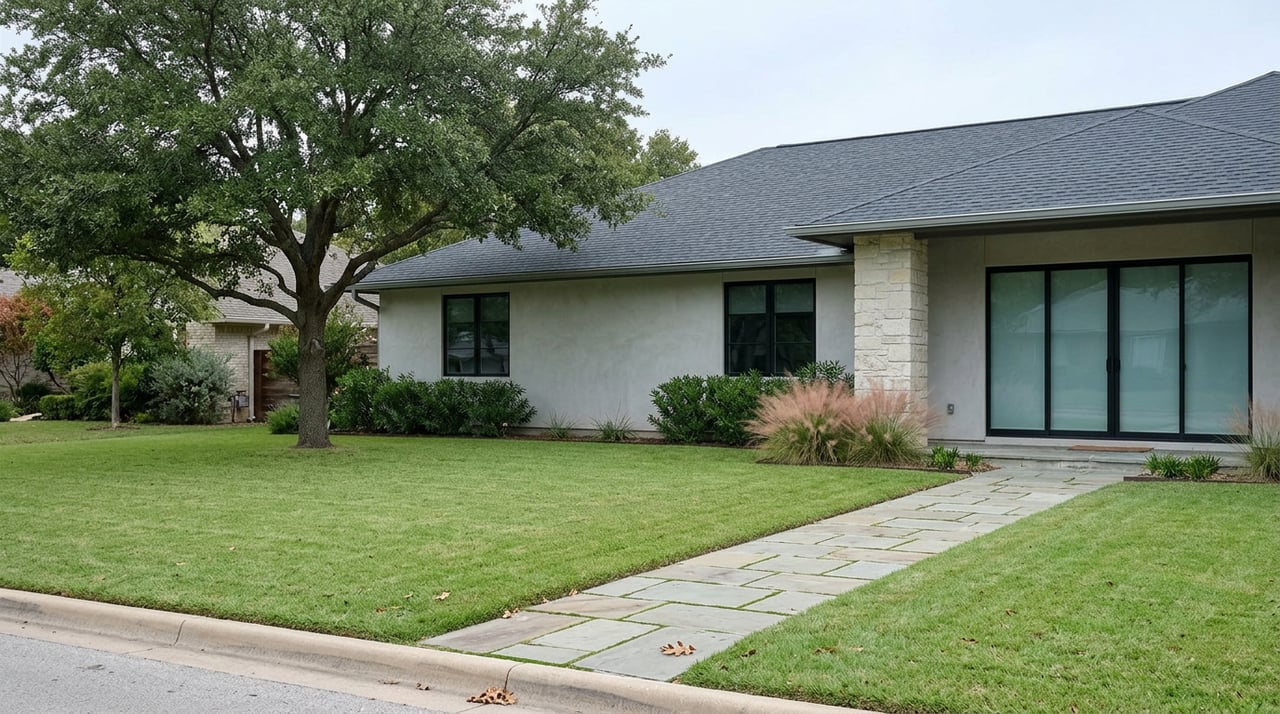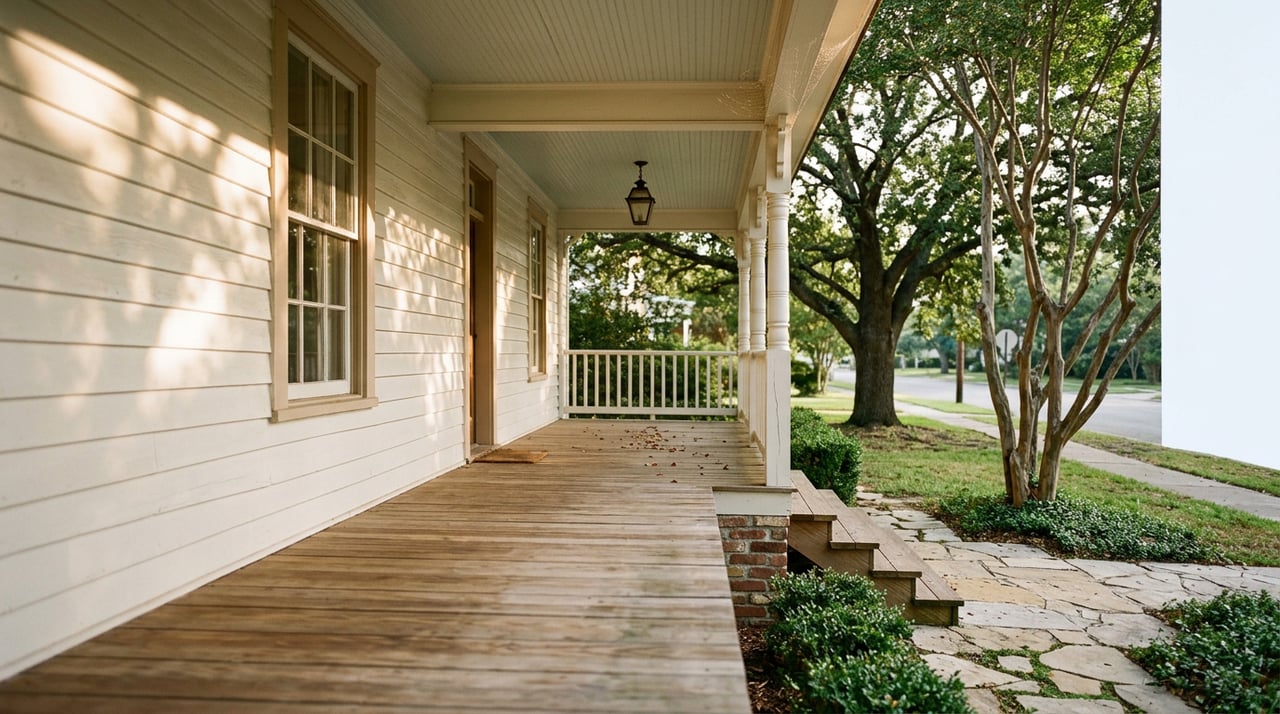
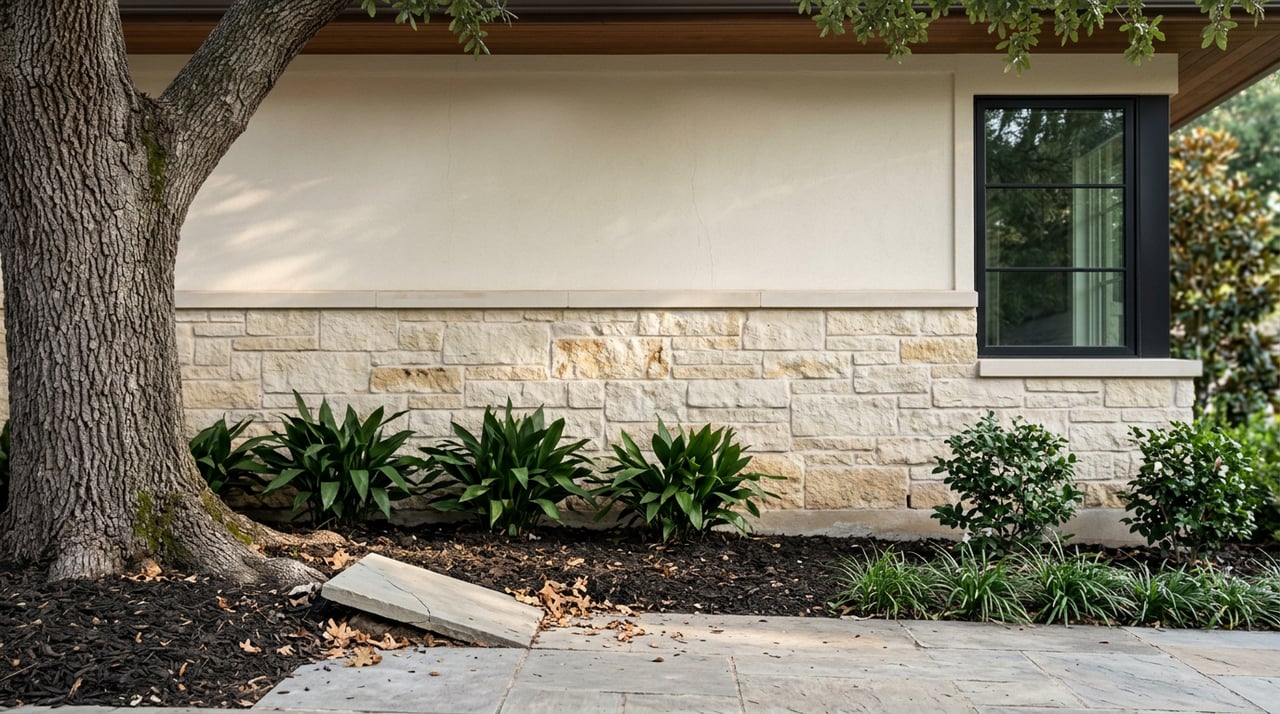
A buyer under contract on a 1930s bungalow off Contour Drive gets the inspection report back and it reads like a list of problems: foundation movement notes, a cast-iron drain line flagged for scaling, a note about galvanized supply lines narrowing with age, maybe a line about knob-and-tube wiring still live somewhere in the attic. The instinct is to treat this as bad luck, or worse, as a house that was hiding something.
It wasn't hiding anything. In Olmos Park, that report is what a normal house looks like. The neighborhood's housing stock runs almost entirely from the 1920s through the 1940s, and the same live oak canopy that makes Contour Drive, Park Hill, and East Olmos Drive worth a premium is mechanically tied to the plumbing and foundation issues sitting inside nearly every inspection report written in the city limits. Understanding that connection, rather than reacting to it, is what separates a buyer who negotiates well from one who walks away from a house that a dozen other buyers will happily take.
The Amenity and the Liability Share a Root System
Local plumbers who work Olmos Park regularly describe root intrusion into the original clay sewer laterals as the neighborhood's baseline condition rather than an exception. Most of the housing stock still runs on the plumbing it was built with: galvanized supply lines narrowed by decades of internal corrosion, cast-iron drain lines that scale and crack with age, and clay sewer laterals whose joints are exactly what tree roots are built to find. The mature canopy that makes these streets desirable is the same canopy whose roots are slowly working their way into the pipe joints underneath the lawn.
This is not unique to one lot or one block. Arborists who service the neighborhood note that Olmos Park's live oaks share connected root systems across property lines, and the same interconnection extends into Monte Vista and Terrell Hills, where oak wilt pressure moves underground without any above-ground contact between trees. The canopy that appraises well is a single connected organism running beneath the entire district.
What the Inspector Actually Finds
Three systems account for most of what shows up on an Olmos Park inspection report, and all three trace back to the same construction era.
| System | Typical Age | What Inspectors Usually Flag | Typical Budget |
|---|---|---|---|
| Foundation | 1920s-1950s | Pier-and-beam movement on expansive clay soils | $500-$800 for an independent evaluation |
| Plumbing | 1920s-1940s | Galvanized supply corrosion, cast-iron drain scaling, clay lateral root intrusion | Varies by scope, camera scope recommended before waiving |
| Electrical | Pre-1940s | Remaining knob-and-tube wiring, undersized panels | Varies by extent of remaining original wiring |
A fourth line item that rarely makes the report but always makes the closing conversation is the water heater. Homes here were built around much smaller tanks tucked into closets or attic spaces, which limits replacement options and can trigger venting and code questions when a system finally needs to come out.
None of this means the house is compromised. It means the house is 80 to 100 years old in a neighborhood where almost every comparable listing carries the same profile. A buyer who treats a clay lateral finding as leverage to renegotiate the price is applying newer-construction logic to a market where the seller down the street has the identical finding and three other offers.
The City Fixed Its Pipes. Yours Are Still on You.
Olmos Park has not ignored its aging infrastructure. The city completed a sanitary sewer bond project in two phases between late 2022 and 2023, replacing and rehabilitating public sewer mains and manholes throughout the system. That work addressed the city's mains.
It did not touch the private lateral, the run of pipe connecting each house to the main, which remains the homeowner's responsibility regardless of how new the city's side of the system is. This is the detail that gets lost in a quick sales conversation. A refreshed municipal sewer main tells a buyer nothing about the condition of the 80- to 100-year-old clay pipe running from the house to the street. The two are separate systems with separate ownership, and only one of them shows up on a home inspection.
Flood Zone Is a Parcel Question, Not a Neighborhood Answer
Properties along Olmos Creek and the basin can carry different FEMA flood designations one block apart. A home on one side of a street can sit outside any mapped flood zone while a neighbor closer to the creek carries a Zone AE designation, where flood insurance commonly runs $2,500 to $5,000 a year. That is not a rounding error in a carrying-cost conversation, and it is not something a buyer should assume based on the general reputation of the neighborhood. It has to be checked parcel by parcel before an offer goes in, not after.
The Oak You Want to Trim Before Listing Is a Permit, Not a Weekend Project
Sellers preparing an Olmos Park listing often want to clean up the canopy before photos go out, and this is where timing matters more than most homeowners expect. Under the region's tree preservation rules, a heritage tree, defined as 24 inches or greater in trunk diameter, cannot be removed without a Tree Preservation Permit, and removal carries a mitigation requirement. Arborists working the neighborhood also follow the region's oak wilt cutting protocol on every cut, which requires wounds to be sealed within 30 minutes and discourages pruning oaks between February and July, when the fungus is most active.
Exterior work in Olmos Park also runs through the city's own design review before permits are issued, which typically adds four to eight weeks beyond a standard San Antonio timeline. A seller who wants a tree trimmed before listing photos in April, during peak oak wilt season, with an unplanned permit delay stacked on top, can watch a simple curb-appeal task turn into a scheduling problem that pushes the listing date back by a month or more.
The canopy that adds value above ground is the same root network that quietly works against the plumbing below it. Neither fact cancels the other out. Both belong in the same conversation before a contract is signed.
What This Means at the Closing Table
As of mid-2026, compilations of Olmos Park inventory put the total housing stock at under 800 properties, with only 25 to 40 homes changing hands most years and typical days on market running 30 to 45 days. That scarcity changes how inspection findings function in a negotiation. When almost every comparable home carries the same foundation, plumbing, and electrical profile, a buyer who tries to use a clay lateral or a knob-and-tube note as grounds for a steep price reduction is negotiating against a market that has other buyers ready to accept the same condition.
The buyers who do well here are the ones who price the known issues into their offer from the start rather than discovering them mid-contract and trying to claw the price back. The sellers who do well are the ones who get ahead of the same findings before the home ever hits the market, with a sewer camera scope, a foundation evaluation, and an arborist assessment completed and disclosed rather than waiting for a buyer's inspector to surface them first.
A few things worth doing before either side signs anything:
- Get a camera scope of the sewer lateral, not just a foundation report, since root intrusion is the more common failure point in this housing stock
- Confirm the specific parcel's FEMA flood designation rather than assuming based on the general area
- If any tree work is planned before listing, check the diameter against the heritage tree threshold and build in permit and seasonal timing before setting a listing date
- Treat a clean-looking inspection report as the exception in this market, not the expectation, and price accordingly
FAQ
Does a foundation or plumbing finding on an Olmos Park inspection mean I should walk away from the deal? Not on its own. Given the age of the housing stock, most comparable homes in the neighborhood carry similar findings. The more useful question is whether the cost has been accurately estimated and reflected in the offer, not whether the finding exists at all.
How do I find out my exact flood zone before I write an offer? Flood designations vary by parcel along Olmos Creek and the basin, so a general neighborhood reputation is not enough. Confirm the specific address against current FEMA mapping before finalizing an offer, since insurance costs can shift materially between adjacent lots.
Can I trim my oak trees before listing without a permit? If the tree meets the heritage threshold of 24 inches or more in diameter, removal requires a permit and carries a mitigation obligation. Even routine pruning on oaks should follow the region's oak wilt protocol, particularly outside the recommended winter and high-summer pruning windows.
Every one of these findings is knowable before a contract is signed, not after. That is the difference between a transaction that closes on schedule and one that reopens negotiations three weeks in. If you are preparing to sell a legacy Olmos Park home or evaluating one to buy, Cory Bakke can walk the property with you, flag what an inspector is likely to find, and build a pricing strategy around it before it becomes a surprise. Request a Private Home Valuation to start that conversation.