If you have ever driven through Monte Vista and wondered why one block feels stately, the next feels romantic, and another feels almost storybook, you are noticing one of the neighborhood’s defining traits: architectural variety. For buyers and sellers in 78212, that variety is more than visual charm. It shapes maintenance, renovation decisions, buyer appeal, and long-term value. This guide will help you understand the architectural styles that define Monte Vista homes and what those styles mean in practical terms. Let’s dive in.
Monte Vista Is Eclectic by Design
Monte Vista is not a one-style neighborhood. City and state sources describe it as an eclectic historic district, with most development taking place from the 1890s through about 1930. That layered growth helps explain why the area feels collected over time rather than built from a single plan.
The district includes a wide range of architectural influences. Official sources identify Classical Revival, Tudor, Spanish Eclectic, Queen Anne, and Craftsman homes, while additional documentation also points to Georgian, Renaissance Revival, Mediterranean, Neo-Spanish, Victorian, and Art Deco examples. In other words, Monte Vista’s identity comes from its mix, not from uniformity.
Tudor Revival Stands Out Fast
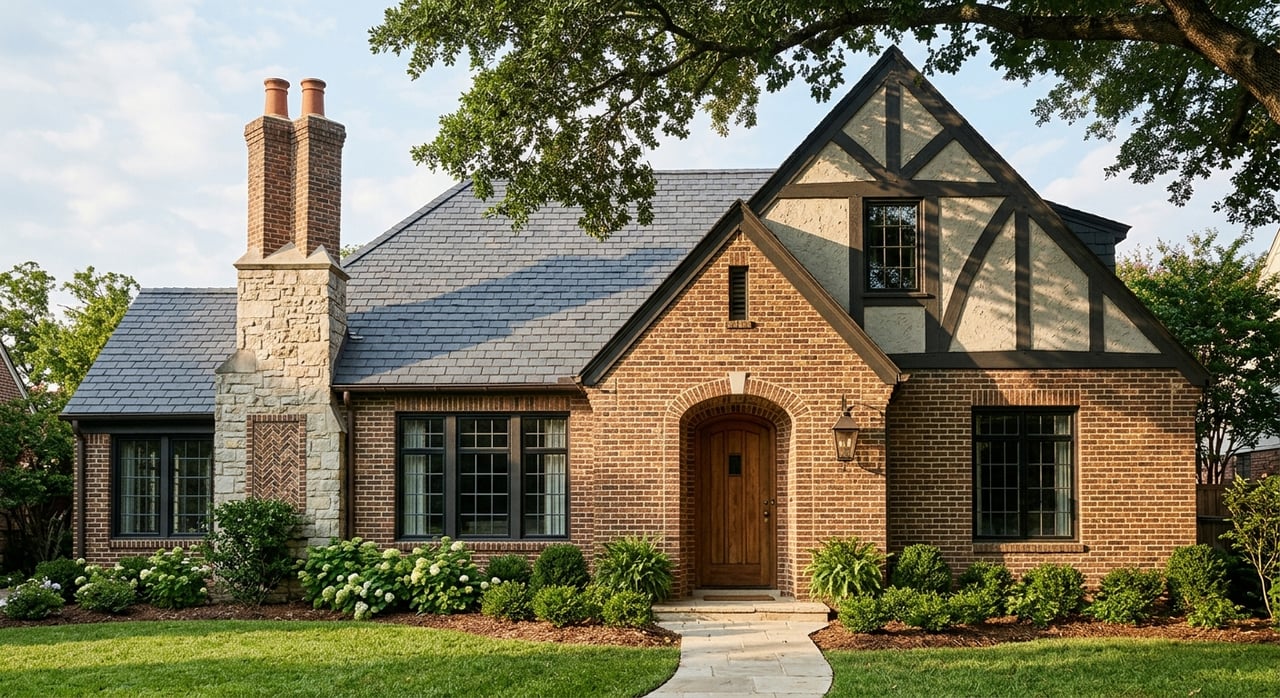
Tudor Revival is one of the clearest hallmark styles in Monte Vista. If a home has a steeply pitched roof, prominent cross gables, decorative half-timbering, tall narrow windows, or a substantial chimney, you may be looking at a Tudor-influenced property.
These homes often create a strong first impression because their rooflines and details are so distinctive. In Monte Vista, that visual character can be a major part of buyer interest, especially when original design elements remain intact and well maintained.
What Buyers Notice in Tudor Homes
Tudor homes often feel dramatic from the street. Buyers tend to notice the steep roof forms, textured facades, and old-world details that set them apart from more standard residential architecture.
From a practical standpoint, those same details can require attention over time. Chimneys, decorative wood elements, windows, and masonry features all matter, both aesthetically and functionally, in preserving the home’s character.
Craftsman Homes Feel Grounded and Detailed
Craftsman houses offer a very different expression. These homes are usually lower, broader, and more horizontal in appearance, with low-pitched gables, wide overhanging eaves, exposed rafters or purlins, decorative braces, and large porches supported by square or tapered columns.
In Monte Vista, Craftsman homes often appeal to buyers who value visible workmanship and strong indoor-outdoor connection. Their porches and structural detailing create warmth without feeling ornate.
Why Original Craftsman Features Matter
Craftsman design depends heavily on materials and proportion. Original wood siding, trim, windows, and porch details all contribute to the home’s architectural identity.
San Antonio preservation guidance emphasizes repair over wholesale replacement. That makes condition and material integrity especially important when you are evaluating a Craftsman home for purchase, sale, or future updates.
Spanish Styles Add Warmth and Texture
Many buyers use the phrase “Spanish Colonial” as a catch-all, but in Monte Vista that label is not always precise. City sources specifically reference Spanish Eclectic, while preservation sources place some homes within a broader family that includes Spanish Colonial Revival and Mediterranean Revival.
That distinction matters less for casual conversation than it does for understanding the home correctly. In practical terms, many of these houses share recognizable features such as stucco walls, clay tile roofs, arches, arcades or loggias, and ornamental details inspired by Spanish and Mediterranean precedents.
Why the Labels Overlap
In a neighborhood like Monte Vista, style categories can overlap because revival-era homes often borrowed from several traditions. A house may read broadly as Spanish in character while still fitting more precisely under Spanish Eclectic or Mediterranean Revival.
For buyers and sellers, the key takeaway is simple: the home’s materials, roof form, openings, and decorative details tell the story. The best description is usually the one that matches those features most closely.
Colonial and Classical Revival Bring Symmetry
Monte Vista also includes Colonial Revival and Classical Revival homes. These houses often emphasize balance and order, with symmetrical facades, prominent entries, columns, pediments, fanlights, and Palladian-inspired windows.
These styles often appeal to buyers who like formal composition and timeless curb appeal. They can feel more restrained than Tudor or Queen Anne homes, but that restraint is exactly what gives them presence.
Queen Anne Adds Ornament and Variety
Queen Anne homes help show just how visually layered Monte Vista can be. Unlike the symmetry of Colonial or Classical Revival, Queen Anne houses are often asymmetrical and highly expressive, with mixed materials, turrets, stained glass, and spindlework.
These homes usually stand out because they embrace detail. For a seller, that can be a powerful part of the home’s story. For a buyer, it can signal both charm and a need for careful stewardship of specialized architectural elements.
Why Style Matters Beyond Curb Appeal
In Monte Vista, architecture is not just aesthetic. Style has a real connection to how a home is maintained, marketed, and valued over time.
San Antonio’s preservation office notes that historically designated neighborhoods retain value at a greater rate than non-designated neighborhoods, and that designation may increase desirability and be reflected in higher assessed valuations. Still, style alone is not a price guarantee. The strongest value story usually comes from a combination of architectural character, intact original features, thoughtful upkeep, and compatible updates.
Character and Condition Work Together
A beautiful facade can attract attention, but condition shapes confidence. Buyers tend to respond most strongly when a home’s defining features have been cared for rather than stripped away or replaced with mismatched materials.
That is especially true in a neighborhood where details like stucco, tile, wood windows, chimneys, masonry, porches, ironwork, and decorative trim all contribute to the property’s appeal. The style draws the eye, but the integrity of the home supports the value proposition.
Historic Review Affects Exterior Changes
Monte Vista’s historic context is important for any buyer or seller. The neighborhood is a locally designated historic district, and San Antonio’s preservation framework requires review for exterior modifications and repairs on historic zoning overlay properties.
That review process uses a Certificate of Appropriateness for qualifying work. The city also notes that review can apply even to areas not readily visible from the street, so it is wise to understand the process before planning exterior changes.
What Historic Designation Does and Does Not Mean
Historic designation does not change the property’s use. The city also states that owners are not automatically required to restore a house to historic conditions.
At the same time, exterior features remain important because they are part of the district’s protected fabric. The city also cautions that painting historically unpainted brick or masonry can accelerate deterioration, which is one more reason style knowledge matters when making updates.
What Buyers Should Look For
If you are shopping in Monte Vista, try to look past style as a label and focus on what the house is actually telling you. Architectural details can give you clues about maintenance priorities, future review considerations, and how much original character remains.
A helpful checklist includes:
- Roof shape and roofing materials
- Condition of chimneys and masonry
- Original or compatible windows
- Stucco, siding, and trim condition
- Porch elements, columns, and railings
- Decorative features such as half-timbering or ironwork
- Evidence of compatible exterior updates
These details can affect both immediate appeal and longer-term ownership experience.
What Sellers Should Understand
If you own a Monte Vista home, your architecture is part of your market position. Buyers drawn to this neighborhood are often responding not just to square footage or location, but to provenance, design integrity, and the feeling that the home has been respected over time.
That is why preparation and presentation matter. Accurate style identification, thoughtful staging, strong photography, and pricing that reflects both character and condition can help your home connect with the right buyer in a meaningful way.
Why Monte Vista Continues to Appeal
Monte Vista’s lasting appeal comes from authenticity, coherence, and variety. The neighborhood offers a collection of homes shaped by early 20th-century design movements, preserved within a local framework that recognizes their architectural importance.
For buyers, that creates a neighborhood experience with more depth than a typical one-era subdivision. For sellers, it means your home’s architectural story can play a central role in how it is perceived and valued in the market.
If you are considering buying or selling a historic home in Monte Vista, a nuanced understanding of style, condition, and local review standards can make a meaningful difference. For tailored guidance on valuing, preparing, or purchasing a character-rich property in central San Antonio, connect with Cory Bakke.
FAQs
Is Monte Vista in San Antonio one architectural style?
- No. Monte Vista is officially described as an eclectic historic district with multiple styles, including Tudor, Craftsman, Spanish Eclectic, Classical Revival, and Queen Anne.
Do Monte Vista historic homes in 78212 require full restoration?
- No. San Antonio states that owners are not automatically required to restore a historic property to earlier conditions.
Does Monte Vista historic designation change how a home can be used?
- No. The city says historic designation does not change property use, though exterior work on historic zoning overlay properties may require review.
What does San Antonio review for Monte Vista exterior changes?
- Exterior modifications and repairs on historic zoning overlay properties may require a Certificate of Appropriateness through the city’s review process.
Are all Spanish-style Monte Vista homes properly called Spanish Colonial?
- Not always. In Monte Vista, some homes may be more accurately described as Spanish Eclectic or Mediterranean Revival depending on their features.
Can architectural style affect Monte Vista home value?
- It can influence buyer appeal and desirability, especially when original character is intact and well maintained, but style alone does not guarantee value.